
The interest rate futures market has priced the official cash rate at 4.75% until the end of 2026.
This means the Reserve Bank of Australia (RBA) will raise at least two, and possibly three, more interest rates this calendar year.
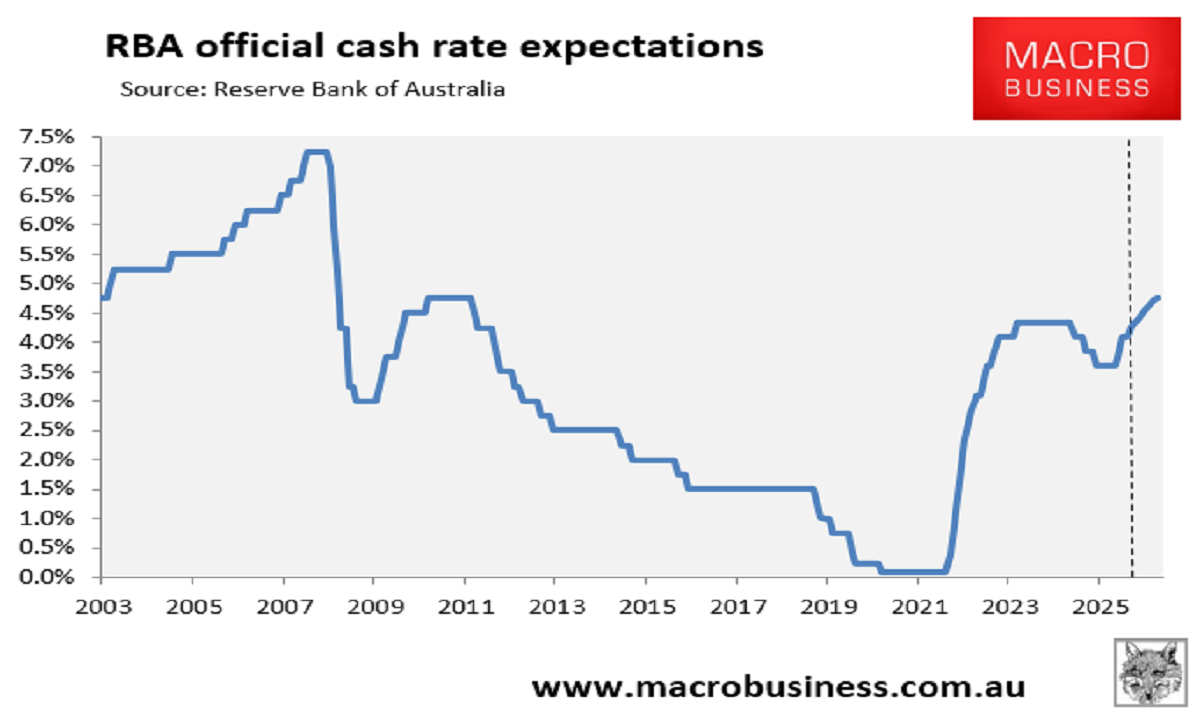
If the RBA makes two more rate hikes, the official cash rate will end the year at 4.60% – the highest level in 15 years. If the RBA makes three hikes, it will end 2026 with a cash rate of 4.85%, the highest level in 18 years.
Advertisement
The impact of such rate rises on the average new mortgage holder is shown in the table below, which compares monthly mortgage payments at the start of the year, before the RBA began its hiking cycle.
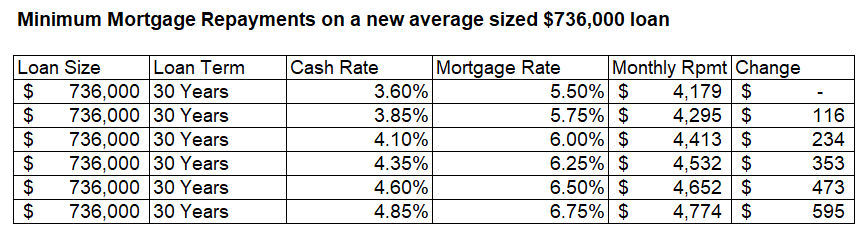
As you can see, the average mortgage payment on a typical $736,000 new mortgage will be $473 per month higher if the cash rate hits 4.60%, and $595 per month higher if the year ends at 4.85%.
Advertisement
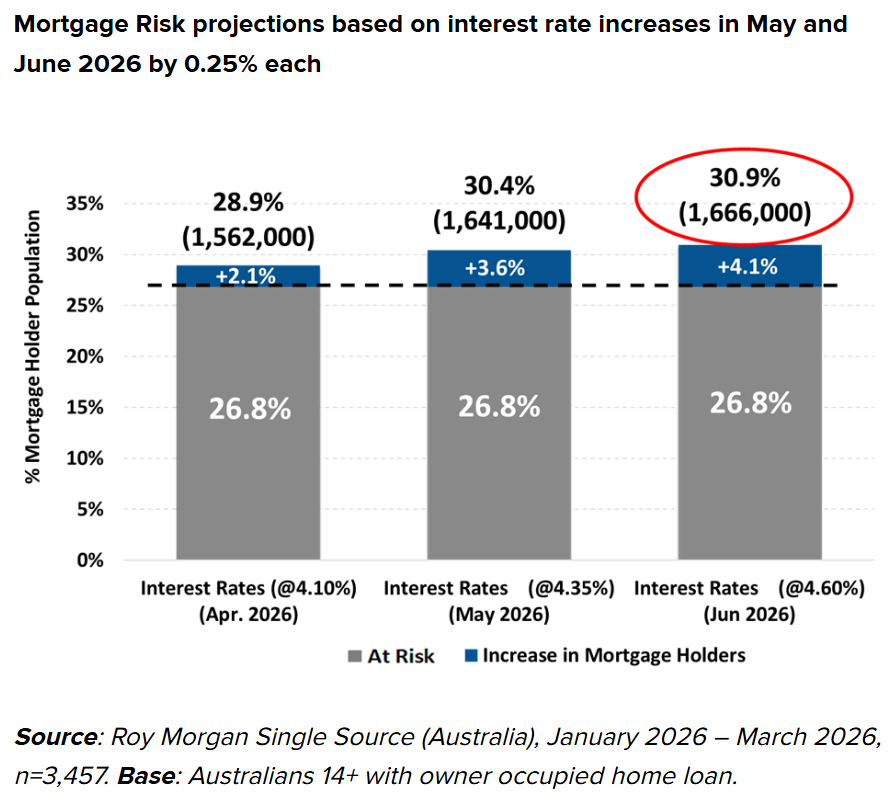
According to Roy Morgan’s analysis, 30.9% of mortgage holders would be “at risk” of stress if the RBA more than doubled the official cash rate to 4.60%:
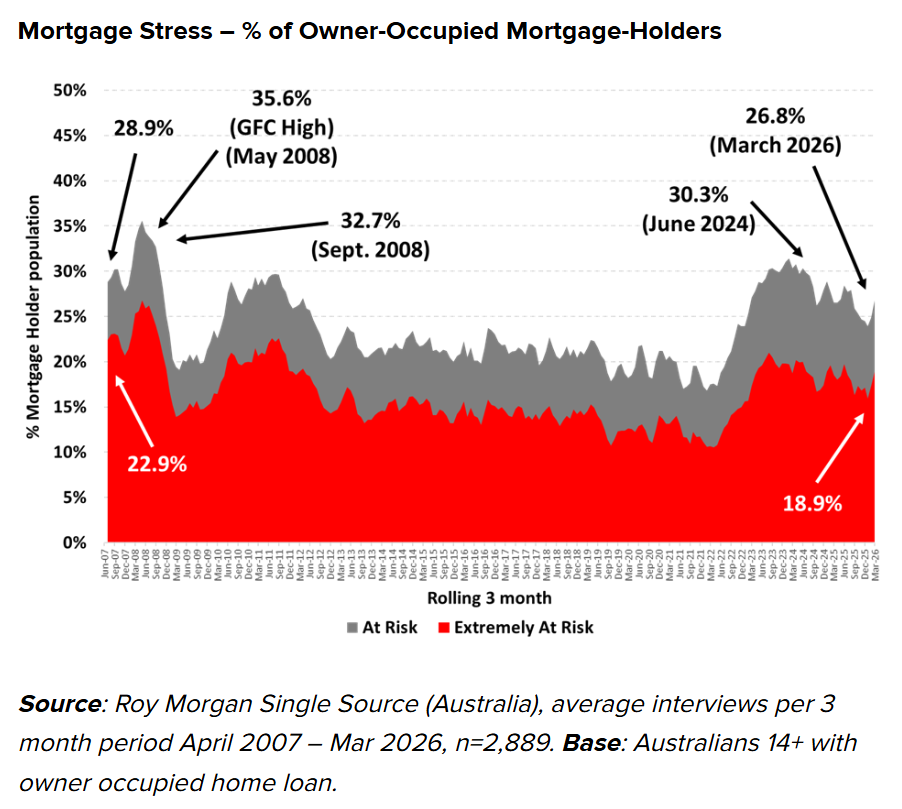
This would represent the highest rate of mortgage stress since the global financial crisis in mid-2008, when the official cash rate reached 7.25 percent:
Advertisement
Roy Morgan CEO Michelle Levine warned that the biggest risk to mortgage holders is not rising interest rates, but unemployment.
“The reality is that the biggest impact on an individual or household is not the interest rate, it’s when they lose their job or primary source of income”.
Advertisement
While the current unemployment rate of 4.3% is historically low, risks are rising.
In addition to rising inflation and interest rates, the prospect of diesel fuel shortages could literally shut down parts of the economy, leading to recession and high unemployment.
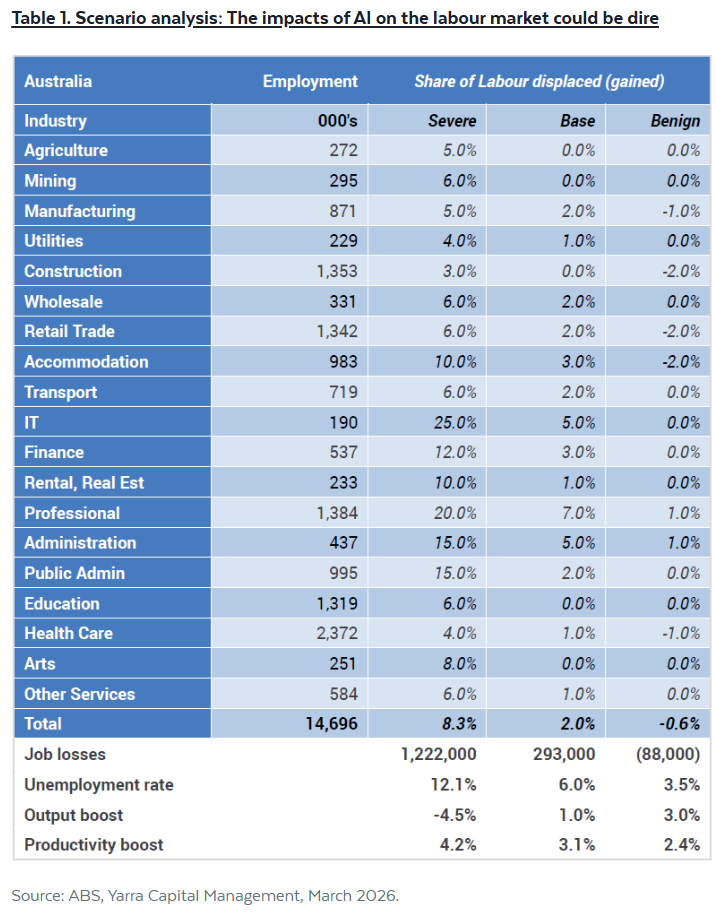
Tim Tuohy from Yara Capital also warned that if A.I “Mass deployment in Australia over next two years”Then the country’s unemployment rate could rise to 6% or more:
Advertisement
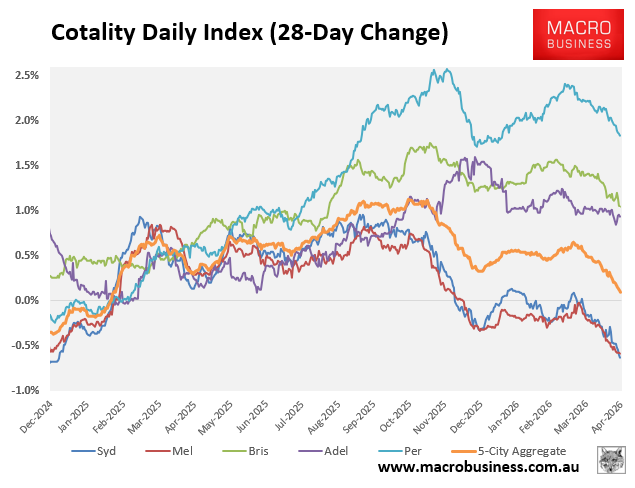
Recent first home buyers who have taken advantage of the 5% deposit scheme to buy in Sydney and Melbourne should feel particularly vulnerable, as house prices in both these markets are now falling sharply.
Advertisement
Recent first home buyers in these markets face the possibility of falling into negative equity.