

US stocks fell sharply on Thursday as oil prices rose amid rising tensions in the Middle East. The Dow Jones Industrial Average closed down 739 points, or 1.56 percent, at 46,677.85. The S&P 500 fell 1.52% to 6,672.62, while the Nasdaq Composite fell 1.78% to 22,311.98.
All three major indexes closed at their lowest levels of 2026, with the Dow falling below 47,000 for the first time this year.
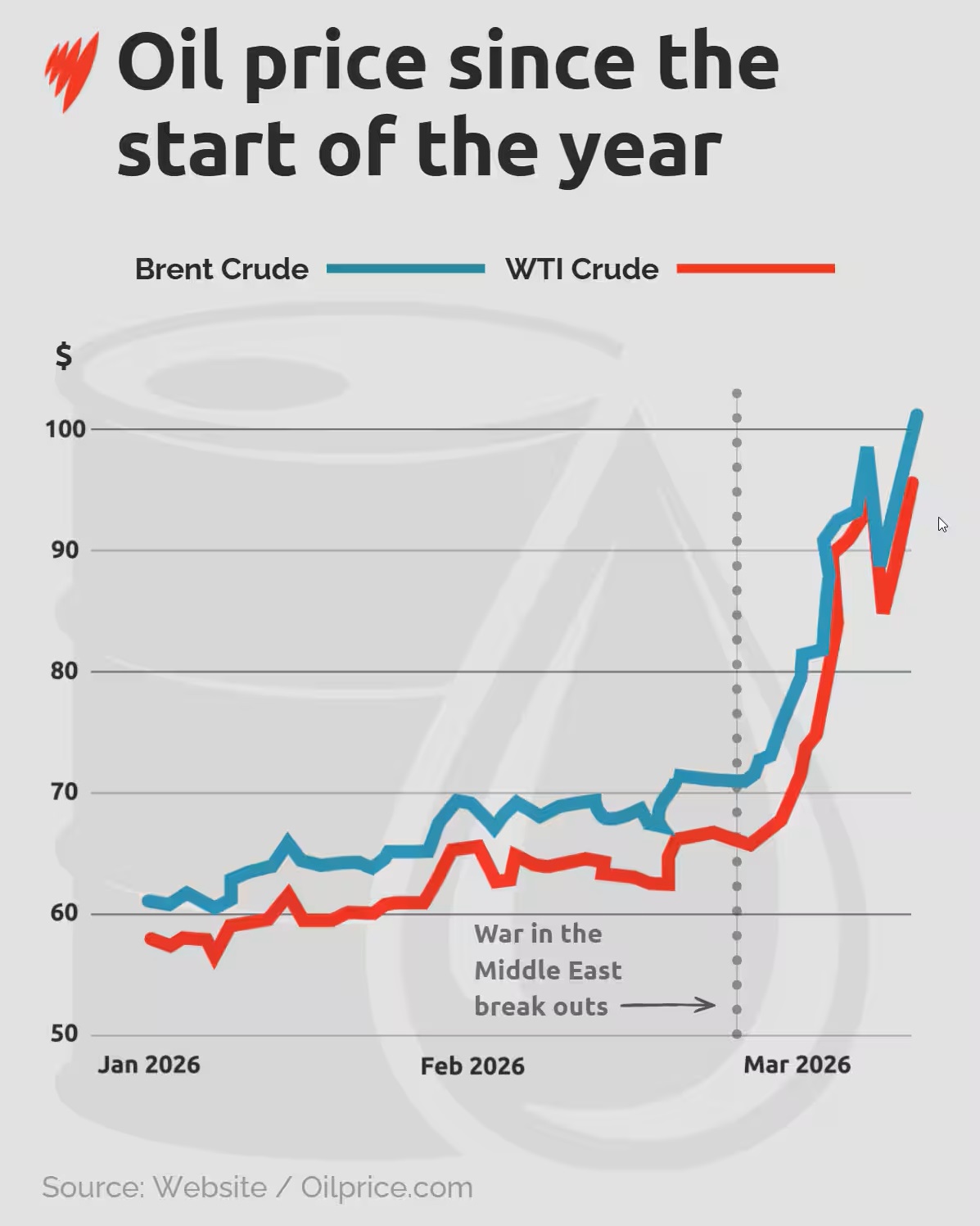
Oil surged above US$100 amid supply concerns.
Energy markets halted selling as oil prices rose sharply on fears of prolonged supply disruptions. Brent crude settled above US$100 a barrel for the first time since 2022, rising 9.22% to US$100.46, while West Texas Intermediate crude rose 9.72% to $95.73.
The gains came after Iran’s new supreme leader signaled to keep the Strait of Hormuz closed as part of his strategy in the conflict. Transportation through the key energy corridor has largely stalled, raising concerns about global supplies.
Officials also reported additional attacks on ships in the Persian Gulf, adding to uncertainty in energy markets.
Markets weigh economic risks.
Rising energy prices have raised concerns about the potential impact on inflation and global growth. Financials and technology stocks were among the weakest sectors during the session, with bank shares falling. Energy companies, including Chevron and ExxonMobil, were among the few stocks that rose.
Despite the recent volatility, the S&P 500 is about 4% below the highs reached earlier this year.
Australian Market Outlook
Australian shares are expected to be lower after a sell-off on Wall Street and continued gains in oil prices. ASX 200 futures were down 28 points, or 0.3%, at 8,592.
Iron ore also rose more than 4 percent amid trade disruptions linked to Middle East conflicts. The Australian dollar weakened about 1% as investors turned to safer assets.
There is no major Australian economic data on Friday. Abroad, markets will focus on US personal income, spending and core PCE inflation measures later in the evening.
Post Comments: 2