
When war in the Persian Gulf resumed in February, it set in motion a chain of events that would be felt for decades to come, not only in the world of geopolitics but also in the balance of global energy consumption and manufacturing.
Leaders were forced to face this new challenging reality, cutting off large supplies of oil, gas, fertilizers and other key commodities, particularly to Asia and the rest of the world.
In the Indian subcontinent, one of the first impacts was a shortage of gas and chemicals for fertilizer plants in India and Bangladesh, resulting in dozens of large plants in both countries significantly slowing production or shutting down altogether.
From naphtha to sulfur for plastics used to make industrial acid, the war in the Persian Gulf was a wake-up call, a message in no uncertain terms that a nightmare scenario in which supplies of essential goods were cut off was entirely understandable.
Advertisement
But as most developing countries in Asia struggled to cope with the war’s impact on commodity supplies, there was one notable exception: China.
Part of this resilience was driven by Beijing’s massive strategic reserves of a wide variety of commodities, but there was another factor that kept the Chinese chemical industry humming along as if it were business as usual: the huge coal-to-chemicals complex.
Preparation of reality
Advertisement
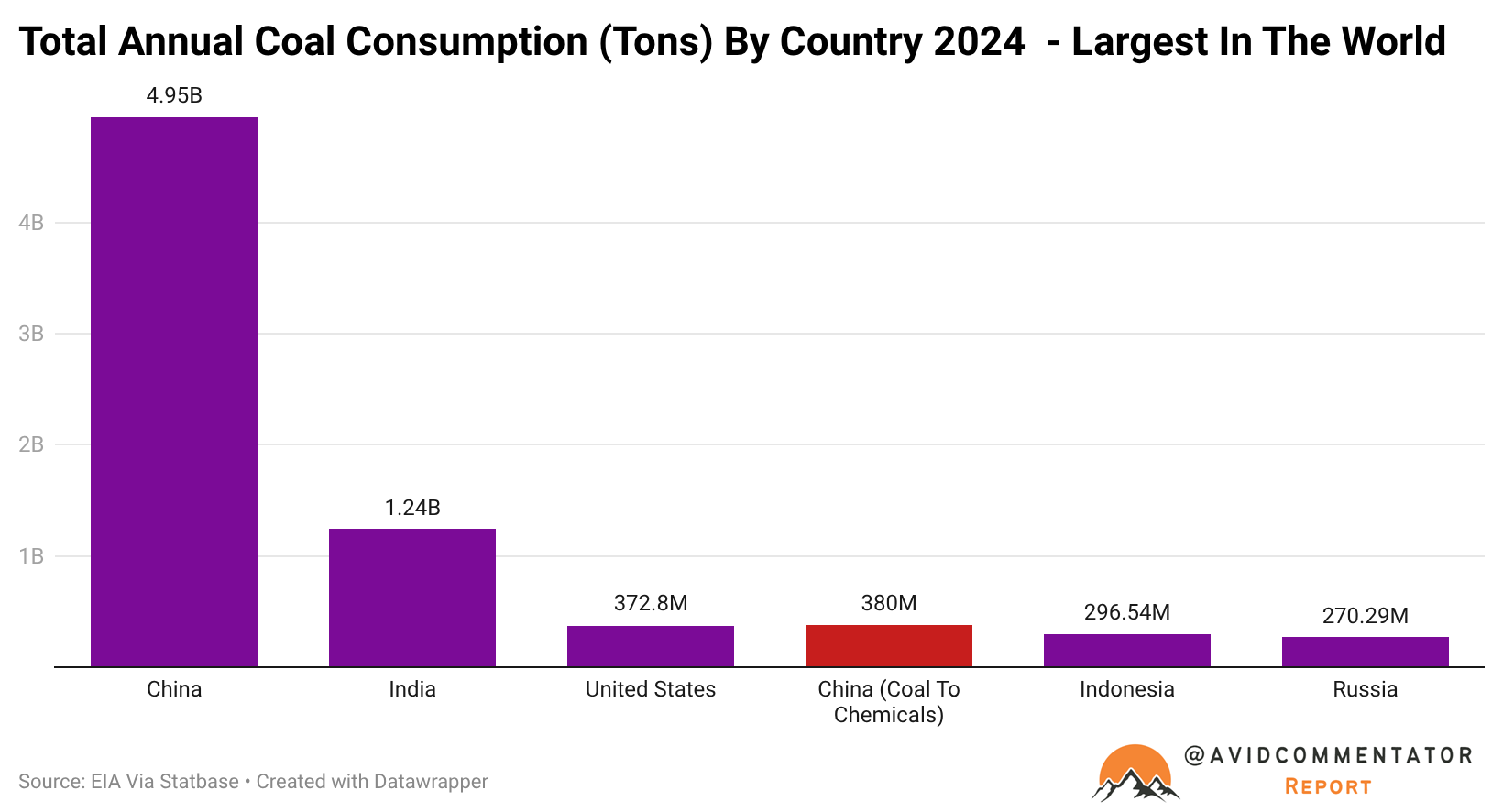
Amidst a heavy reliance on imported gas and oil, Beijing has chosen to build a huge chemicals industry, from coal, which uses 380 million tons a year to produce everything from urea for fertilizer to ethylene for plastics.
By expanding on technology pioneered in Germany in the 1920s that turned coal into oil and other hydrocarbons, China has built a large and flexible domestic chemical supply chain with minimal dependence on foreign materials.
To put the scale of the Chinese coal-to-chemical industry into perspective, if it were its own country, it would be the third largest consumer of coal globally.
Advertisement
Instead of facing shortages of key chemicals such as urea, which saw significant supply problems at the height of the war in the Middle East, China was able to continue to supply its own needs.
China relies on the coal-based chemicals industry to produce about 80 percent of its urea, leaving it very little dependent on imported fertilizer or gas to feed its population, Bloomberg reports.
Advertisement
India wants to repeat Beijing’s success.
As one of the most war-affected nations in the Middle East, the conflict has given India even more impetus to become more self-sufficient.
The Modi government’s ‘Made in India’ campaign has been emphasizing it heavily since 2014, but the recent war has made the need for self-reliance even more evident when it comes to essential goods.
Advertisement
While New Delhi had previously explored the concept of a chemical industry from Indian coal, it did not develop into a larger industry at the time.
All that has changed in recent days, with New Delhi spending $4.5 billion to help kick-start its coal-fired chemicals industry, announcing a goal to use 75 million tons of coal per year to produce chemicals by 2030.
If this happens, the Indian coal-based chemical industry will become the 14th largest consumer of coal in the world.
Advertisement
As part of the planned support programme, the Indian government is covering 20% of the cost of construction of production plants and has said it will reserve the coal used in production, offering a guarantee of future supply.
take away
On paper it looks like another development that will reward Australia’s economic strategy of relying on resource exports, where lady luck ensures that even if you fall in the mud, you’ll get a nice gold coin in the process.
Advertisement
But over a long-term time horizon, it’s a completely different story.
India wants a coal-based chemical industry because it wants self-sufficiency, not because it wants to burn tens of millions of tons more coal every year.
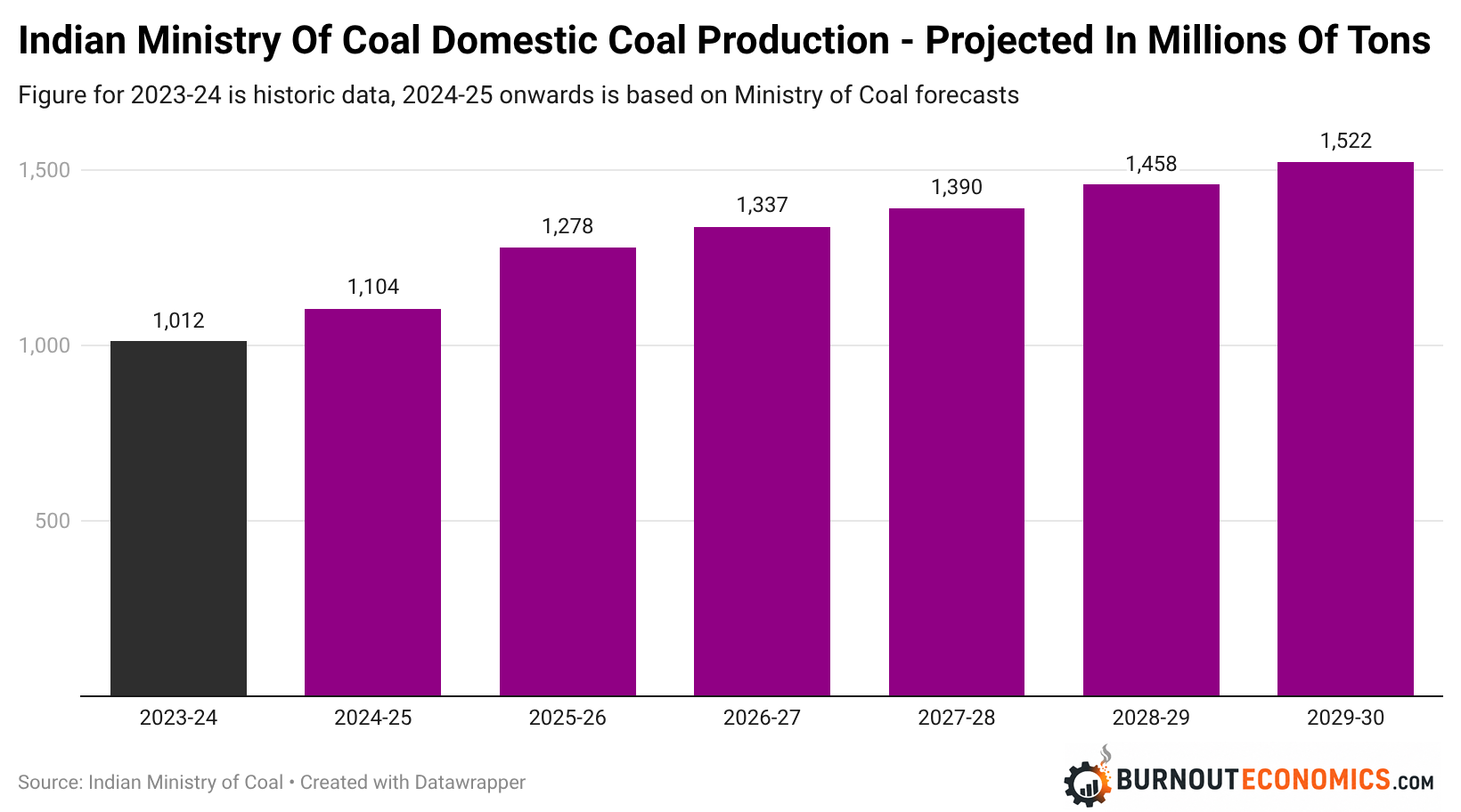
As part of this self-reliance, there were already plans for India to dramatically increase its domestic coal production before the war in the Persian Gulf.
Advertisement
Production was forecast by the Indian Coal Ministry to increase dramatically, from 1,012 million tonnes in 2023-24 to 1,512 million tonnes by 2029-30.
This leaves Australia in an awkward position, at the bottom of a coal boom that is intended to benefit no one but India over the long-term horizon.
Advertisement
Ultimately, this development is further evidence that nations are increasingly making energy and commodity security one of their top priorities.