
Australia’s construction sector has been hit by a wave of construction defaults following the COVID-19 pandemic, as illustrated below by Justin Fabo from Antipodean Macro.
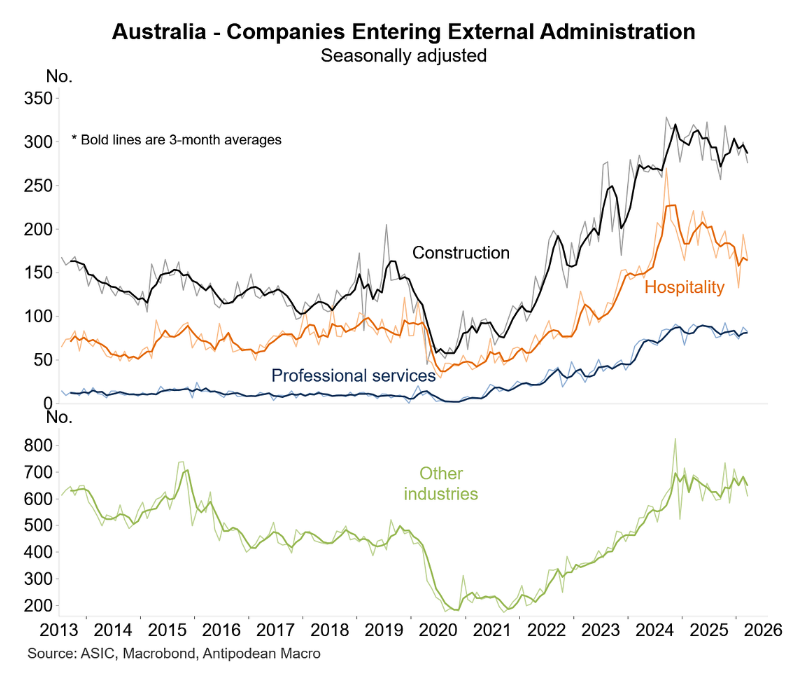
Australia’s post-pandemic wave of construction insolvencies was driven primarily by rising material and labor costs of fixed-price contracts, supply chain delays, rising interest rates, and poor cash flow. This combination of factors was a “perfect storm” that wiped out margins and pushed thousands of builders into administration.
Fixed-price contracts signed before COVID became unprofitable:
Advertisement
The HomeBuilder program encouraged an increase in fixed-price contracts at a time when costs were about to rise. Many architects later found themselves unable to deliver these projects profitably.
Builders locked into pre-pandemic fixed-price contracts suddenly faced massive increases in the cost of lumber, steel, concrete and other inputs. Many firms were pushed straight into administration when clients refused to renegotiate. This dynamic is repeatedly cited as the main cause of disaster.
Delays following COVID-19 also meant builders overpaid for materials and labor before receiving progress payments, creating severe liquidity stress.
Advertisement
Material cost inflation, supply chain disruptions, and labor shortages:
The global supply chain disruption following COVID led to delays and cost overruns, leaving builders unable to complete projects on time or within budget. These delays hampered cash flow and hurt losses.
Specifically, residential building costs increased by more than 40 percent:
Advertisement
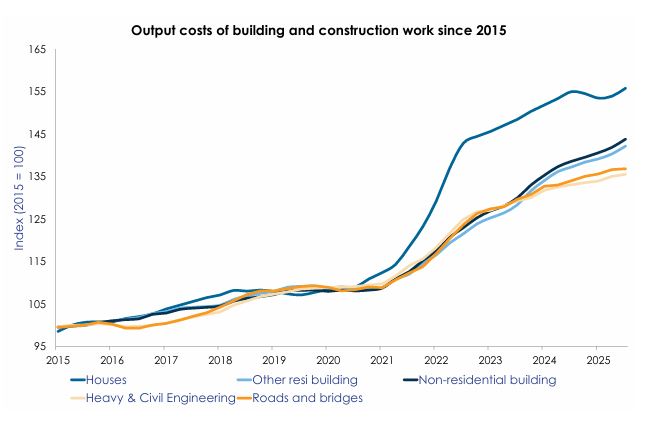
Source: Master Builders Australia
Labor vacancies in the construction sector have nearly doubled from pre-COVID levels, driving up wages and further reducing margins. The increased demand for labor created by the government’s ‘big construction’ infrastructure and energy projects worsened the situation.
Increase in interest rate:
Advertisement
Rising interest rates increased financing costs for builders and developers and cooled demand for new construction. Many firms lacked the financial buffers to absorb these pressures.
Prepare for a new wave of bankruptcies:
The war in the Middle East has created a global energy shock that has already materially increased the cost of materials used in residential construction.
Advertisement
Satterly Property Group has warned that war in the Middle East could push the price of new homes up to $50,000.
Deicorp, a privately owned Australian property development and construction group, has also warned “Workable plans are now modest, and modest plans are now impracticable.” due to increase in expenses.
Along with this, the interest rate is also increasing. After the RBA’s rate hikes in February and March, financial markets are predicting at least two more 25bp rate hikes this year.
Advertisement
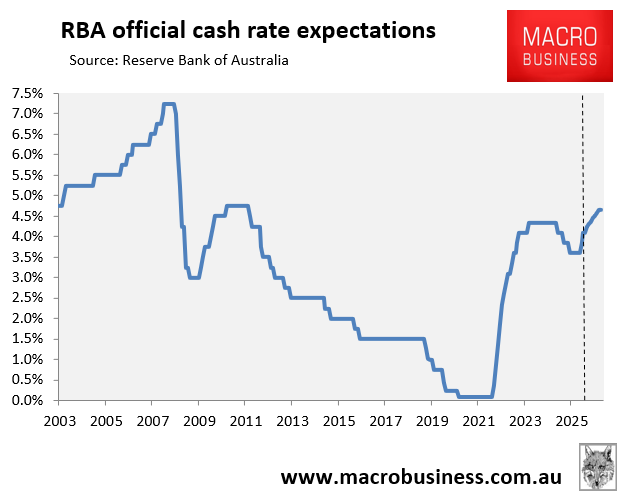
High interest rates will increase financing costs for developers and reduce the ability of buyers to pay, thus acting as another barrier to housing construction.
Members of the building industry have revealed they are close to a bailout as fuel costs and regulatory change hit their profits.
Advertisement
A new Master Builders Victoria (MBV) survey has revealed 63% of members are locked into fixed-price contracts, preventing builders from raising fuel and material prices, and pushing many to cut staff or exit the industry altogether.
Builders in Victoria reported rapid increases in fuel (especially diesel), plumbing, concrete, steel, and electrical supplies. Plus insurance premiums, rent, wages, and tip fees.
Nearly half of the builders surveyed say project costs have increased by 6-10%, and one in five report increases of 11% or more.
Advertisement
Many operators describe the situation as worse than both the post-COVID material cost crisis and the global financial crisis.
“You think you wake up every morning and you think it’s Mike Tyson or Muhammad Ali who’s going to beat you today.” Foundation Technologies Australia business manager Steve Hassett said.
“Because of everything else in our sector right now, it’s more challenging than Covid”.
Advertisement
Heist says his firm has reported $20,000–$30,000 in additional costs since fueling the Middle East conflict.
A demolition firm, Inside and Out Demolitions, has absorbed $20,000 in unexpected diesel prices and is considering closing after 30 years.
As a result, there are many architects “Flowing Water”Working long hours, and unable to charge clients.
Advertisement
The economic reality is that the housing supply curve continues to shift to the left, meaning fewer homes will be built and they will cost more.
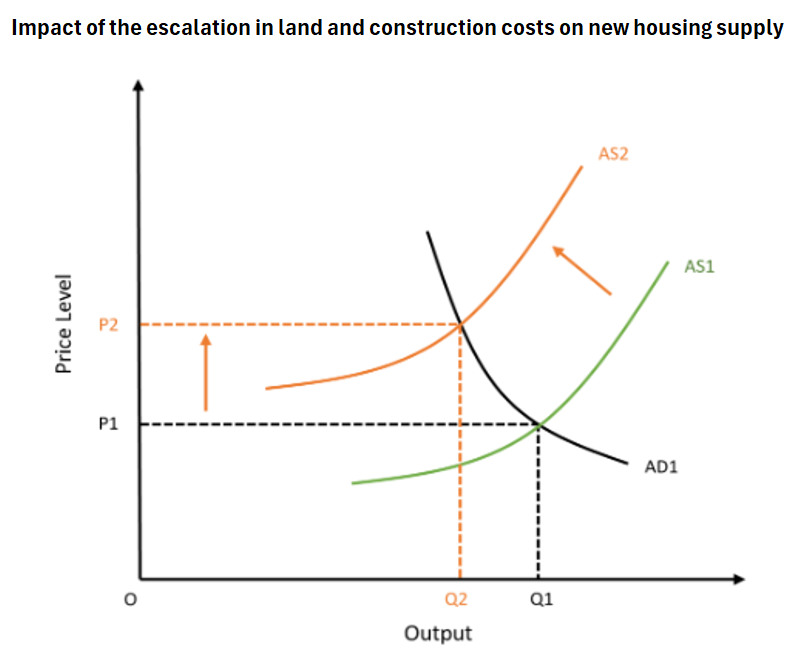
As a result, the Albanian government’s 1.2 million housing target, which is already 27 percent short of its desired rate, will inevitably fall further behind.
Advertisement
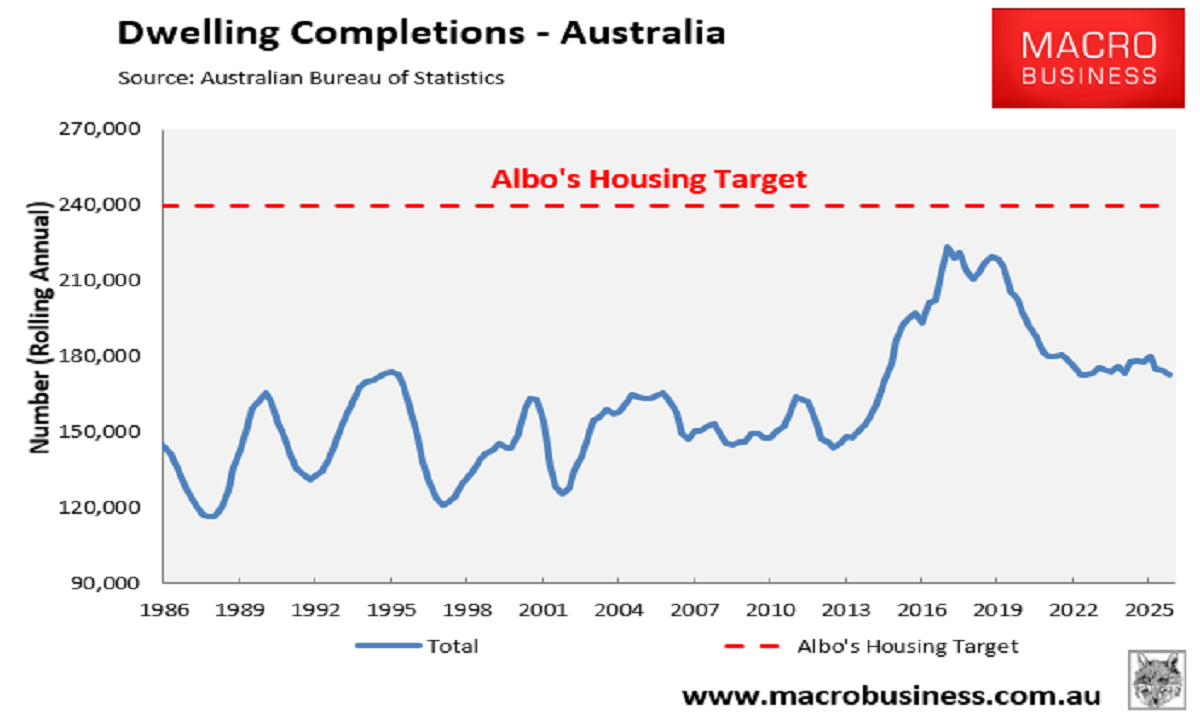
So Australia’s housing crisis is bound to get worse.