
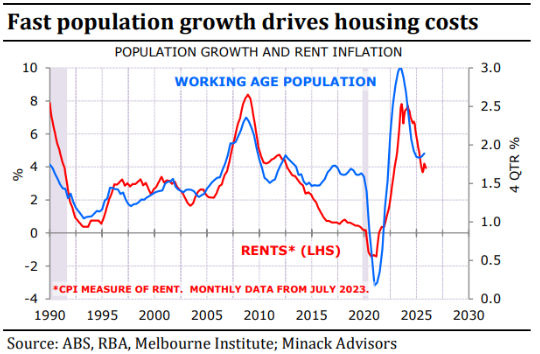
Independent economist Gerard Minnock recently published the following chart showing how Australia’s rent inflation has tracked population growth:
CBA’s latest Housing Market Update notes this. “There is a particularly strong correlation between the supply of high-density housing and rising rents.”:

Advertisement
“This likely reflects the fact that apartments make up a disproportionate share of the rental market: just over 60% of apartments are occupied by renters, compared to around 20% of detached houses”.
You’ll note that the CBA chart above measures “Proportion of Population Change to High-Density Housing Accruals”.. Thus the numerator of the formula is directly determined by the level of immigration, which in turn increases rents.
In other words, basic supply and demand. When population growth (immigration) increases, rents also increase and vice versa.
Advertisement
Given that overseas migrants need accommodation upon arrival and almost always rent first, increased immigration necessarily puts upward pressure on rents, something Australia has recently experienced.
Interestingly, CBA economist Trent Saunders (former economist at Grattan Institute and Domain) presented the data as a supply problem, completely ignoring demand.
However, Alex Joiner, chief economist at IFM Investors, was quick to set Saunders straight:
Advertisement
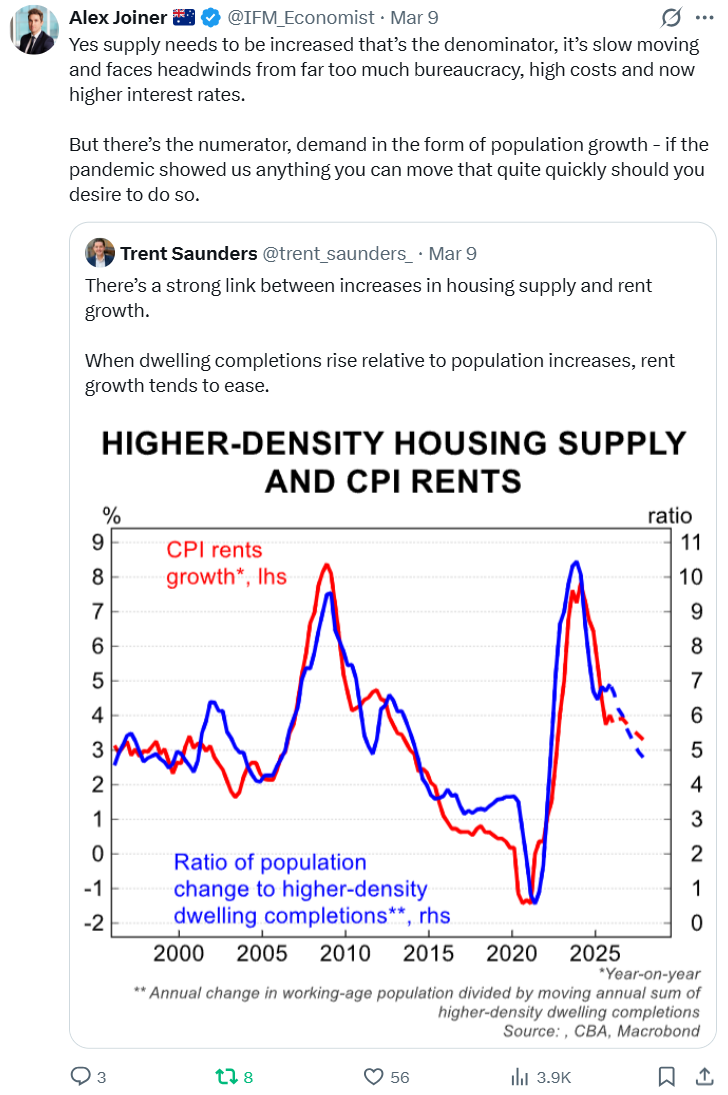
“Yes there is a need to increase the supply, it is very slow and it is facing difficulties due to too much bureaucracy, high costs and now high interest rates”, Joyner wrote on Twitter (X).
“But one number, in terms of population growth, is demand – if the pandemic showed us anything, it’s that you can move it faster if you want to do it”.
Advertisement
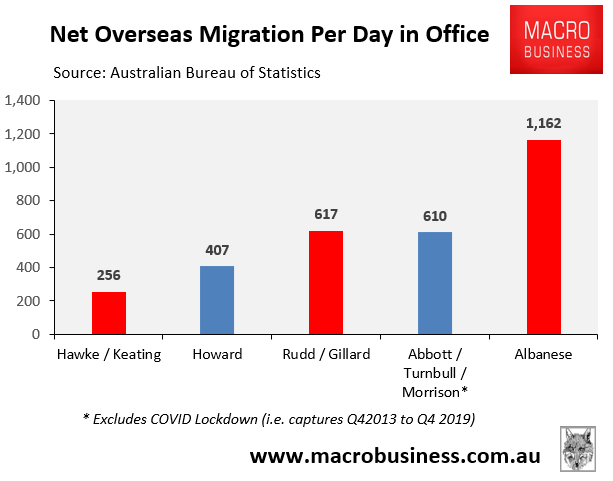
This is the root of the problem. As the federal government has run a historically strong immigration program, rental demand has increased, vacancy rates and listings have fallen, and rents have risen.
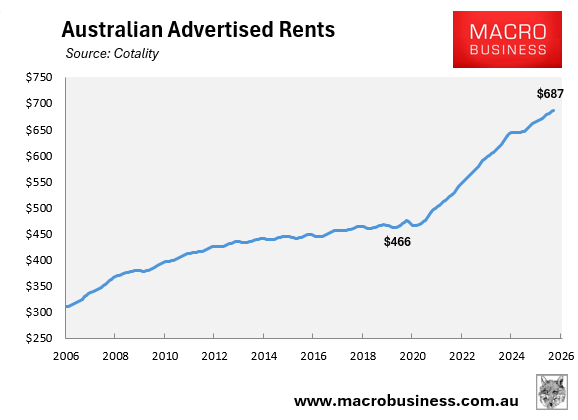
According to Cotality, nationally advertised rents have increased 47 percent since the end of 2019, adding nearly $11,500 to the annual cost of rent for the median tenant:
Advertisement
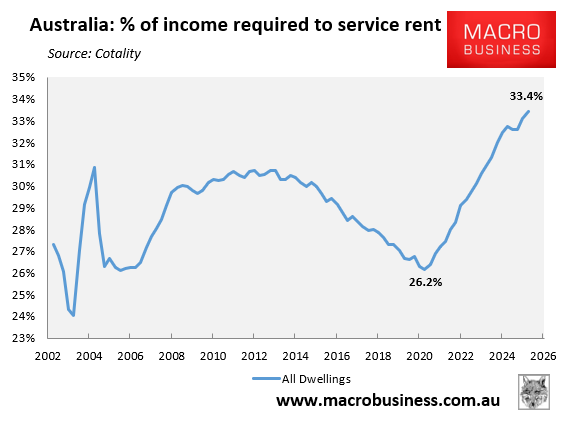
As a result, rental affordability in Australia is now at an all-time low, with median renter households sacrificing a record share of their income to meet rent payments:
Advertisement
Regarding the medium-term outlook, the federal government’s National Housing Supply and Affordability Council (NHSAC) predicts that population demand will outpace new housing supply every year until at least 2028-29.
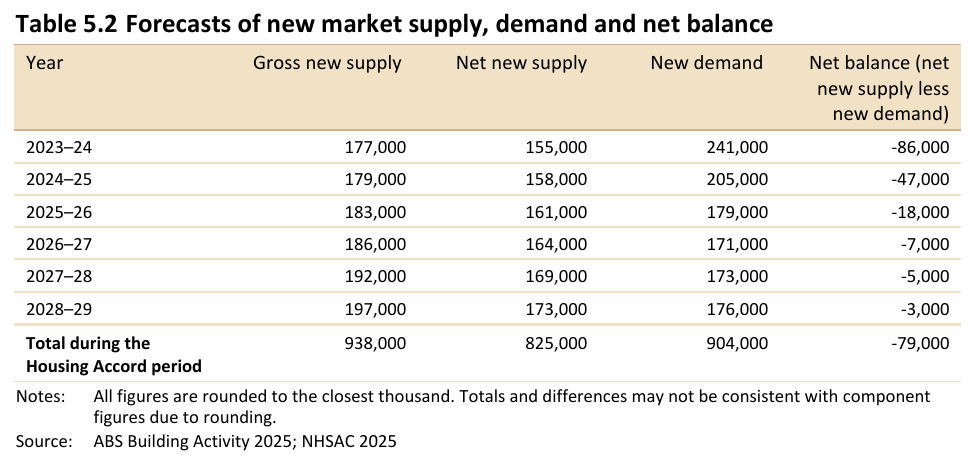
KPMG’s latest annual housing report also predicts a growing housing shortage, with population demand outstripping supply:
Advertisement
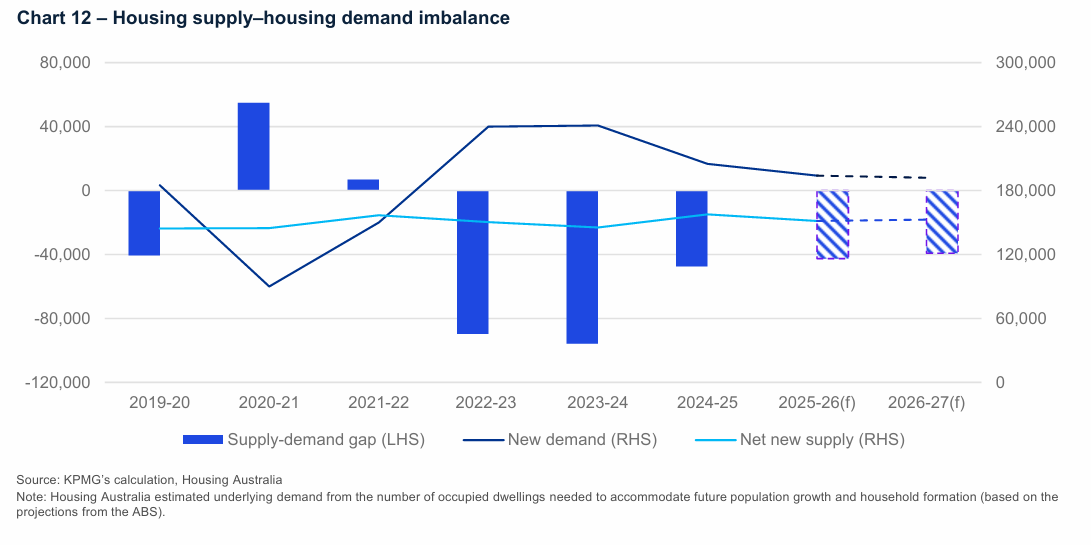
Australian tenants should not suffer:
Canada experienced record immigration inflows following the COVID-19 pandemic, which fueled rent increases:
Advertisement
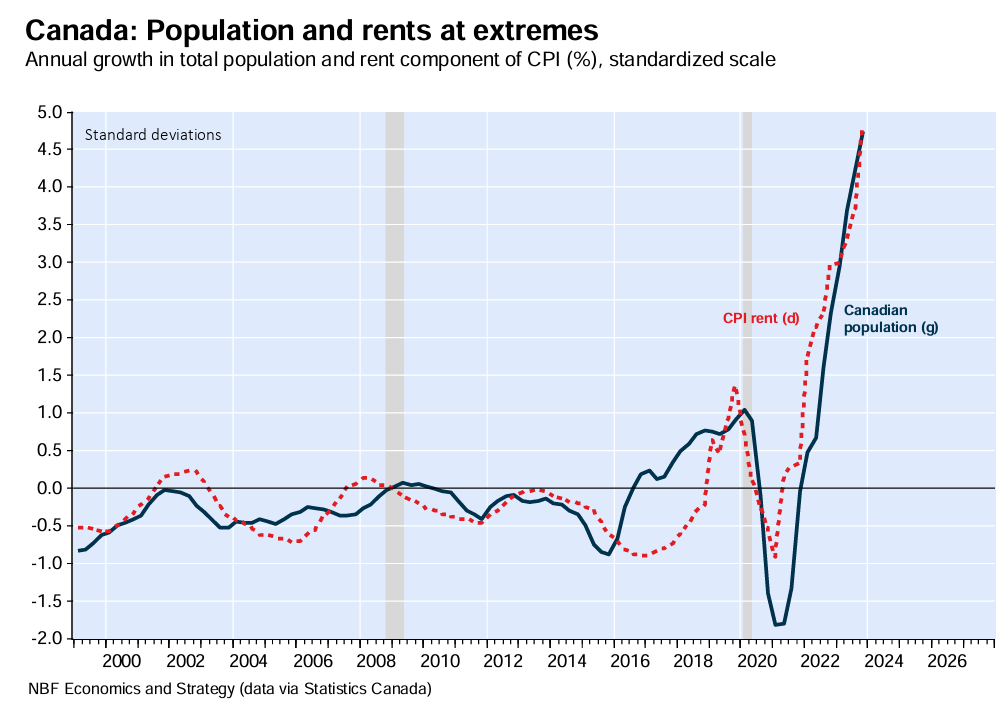
Chart from February 2024 (from National Bank of Canada)
The difference is that the Canadian government implemented significant cuts to both temporary and permanent immigration in 2024.
As a result, population growth in Canada slowed and even turned negative (-76,000) in the third quarter of 2025:
Advertisement
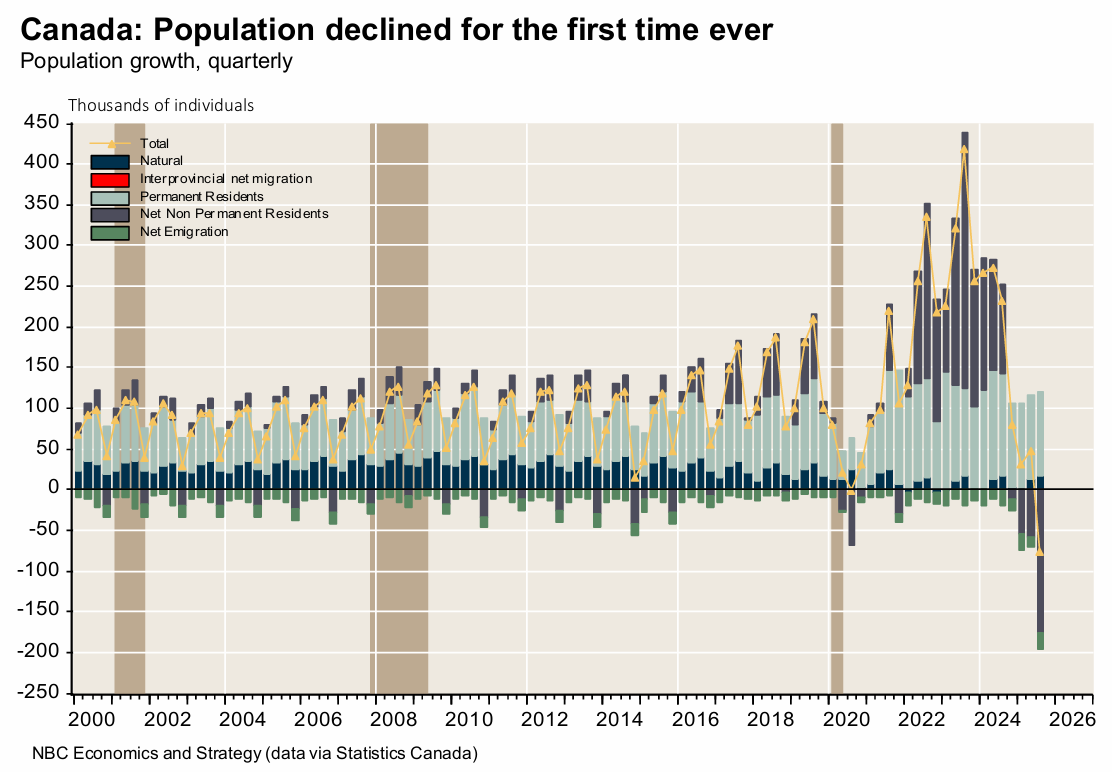
Chart from National Bank of Canada
Canada’s affordability has improved significantly since immigration cuts.
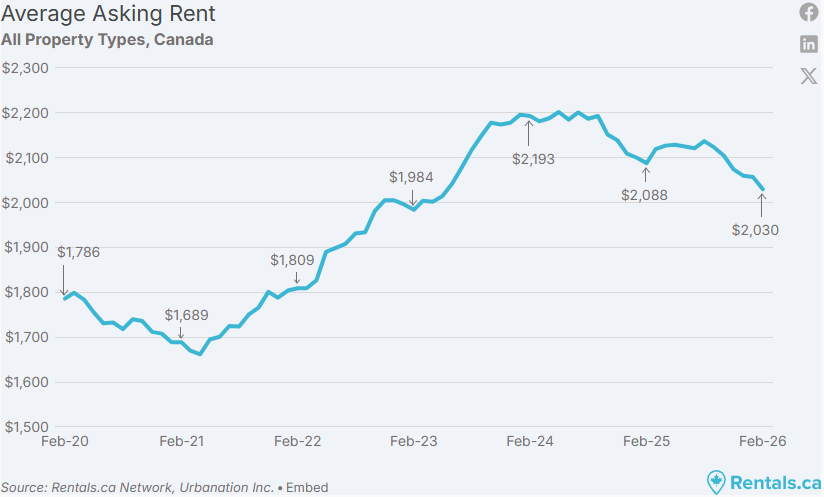
According to Rentals.ca, the average asking rent in Canada has fallen for 17 consecutive months to a 33-month low, down 7.8% from the May 2024 peak:
Advertisement
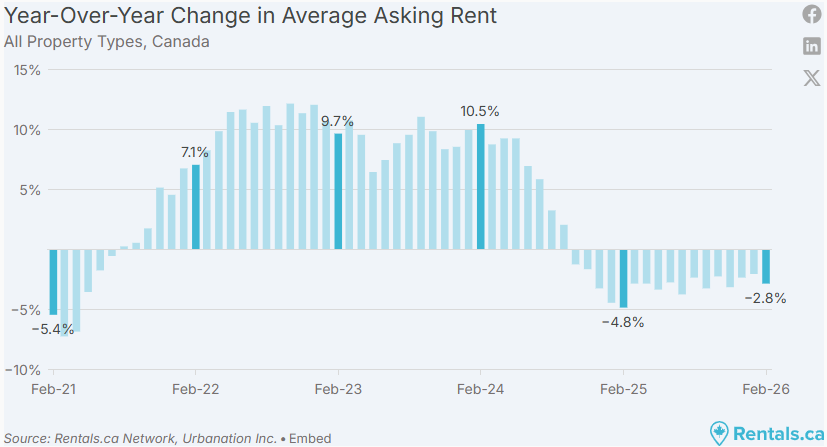
The typical Canadian renter household is now paying $172 less in rent per month, saving them $2,064 per year:
Advertisement
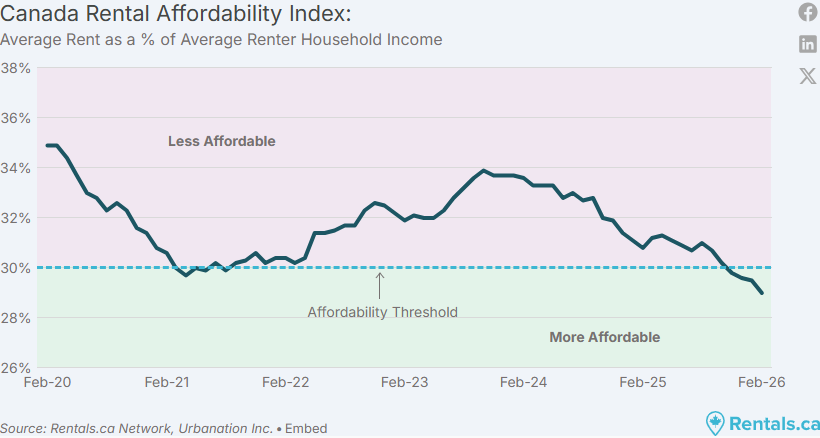
Unlike Australia, rental affordability in Canada is improving rapidly. Average rent in February was 29% of median renter household income, up from 31% a year ago and 34% two years ago, and below the standard 30% affordability benchmark, according to Rentals.ca:
The reality is that Australia is facing the worst rental crisis in modern history, driven by a record rise in post-pandemic immigration.
Advertisement
The only realistic solution to Australia’s rental crisis is for our policymakers to emulate Canada and limit immigration to levels well below the country’s capacity to build housing and infrastructure.