
While the world economy was still reeling from the devastating oil crises of the 1970s, the International Energy Agency (IEA) was created in hopes of limiting future shocks, exposing the stranglehold imposed by a few major oil states.
Almost half a century later, the IEA’s 32 members plan to press the emergency button for only the fifth time in its history.
On Wednesday, the IEA said 400 million barrels of emergency crude oil, a third of the group’s total official reserves, would be released to help calm oil price shocks stemming from the US-Israeli war on Iran. This is the largest release of oil reserves in its history.
Between October 1973 and January 1974, the price of a barrel of crude oil quadrupled after members of the OPEC cartel cut production. It then fell back after the Iranian revolution in 1979 before nearly tripling.
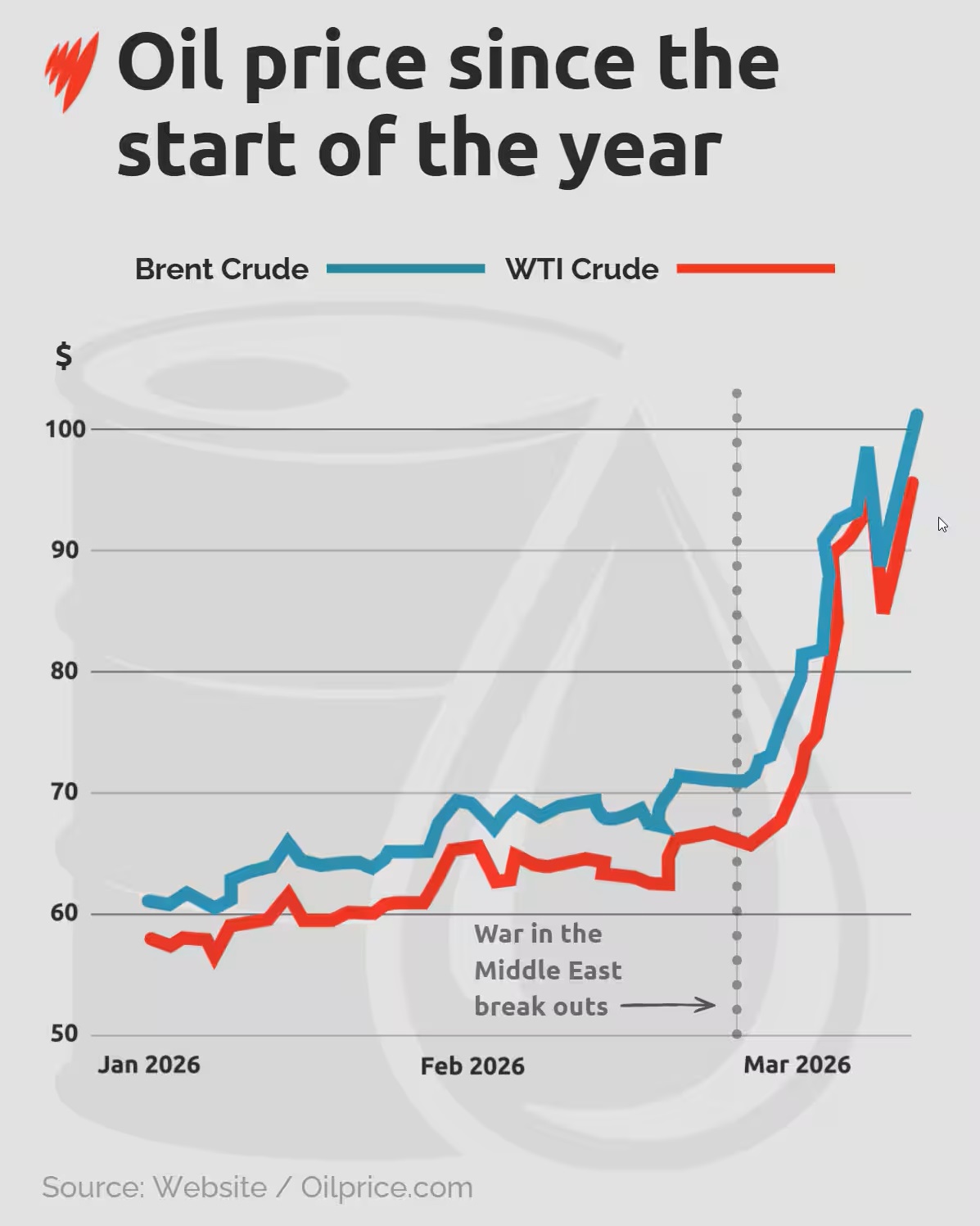
Since then, economic output has become less dependent on fossil fuels, and new energy producers mean more diverse sources of supply. Yet the Iranian response to Donald Trump’s Operation Epic Fury, effectively closing the Strait of Hormuz, underscores just how vulnerable the world is to oil prices.
As a condition of IEA membership, countries sign up to ensure they have emergency oil reserves, equivalent to 90 days of net imports. In total, that amounts to about 1.2 billion barrels – about a third of which is in the U.S. Strategic Petroleum Reserve (which it has maintained despite meeting the IEA requirement, as the shale gas boom has made the U.S. a net exporter).
In moments of severe supply disruptions in energy markets, these stocks can then be released – offered for sale, in other words – to direct the flow of oil to where it is needed.
There have been only four other coordinated releases of strategic supplies since the IEA was established in 1974, underscoring the gravity of the current crisis. These were: in 1991, following Operation Desert Storm, President George HW Bush’s military campaign against Iraq; In 2005, when Hurricane Katrina cut U.S. production in the Gulf of Mexico in half. In 2011, as NATO allies intervened in the Libyan civil war. And in 2022, after Russia’s full-scale invasion of Ukraine.
The UK is among those releasing reserves to the market, contributing 13.5 million barrels.
In the case of the UK, this means ordering the government to release stock held by private companies, and distribute it in the UK.
The plans underscore the fact that while multilateralism has waned in many global forums, when an emergency arises, collective action among like-minded countries is still possible – even though major economies, including China, sit outside the IEA.
Britain’s chancellor, Rachel Reeves, has been involved in talks with fellow G7 finance ministers about the IEA plan, with the US apparently set to limit the impact on fuel prices.
The IEA’s new release is more than the 182m barrels put on the market in two separate episodes during the Ukraine war.
Past releases have seen oil prices fall by $10-$20 per barrel, although prices have been so volatile in recent days that it may be difficult to disentangle the effects of excess supply from Trump’s latest announcements, or ground action in the Middle East.
But experts warn there are reasons to worry that the problem may not be solved if the violence in the Middle East proves to be long-lasting, and that sending additional supplies to the market may not solve the problem.
Capital Economics’ chief global economist, Neil Shearing, proposed closing the Strait of Hormuz, which would cut off 10 million barrels of supply per day. But the largest IEA release of stocks in the past was 2.5 million barrels per day.
Schering said it depends on whether the extra crude can be delivered to where it’s needed: “You can only leave as much as the pipelines have capacity for.” And a longer conflict could drain more supplies from the IEA’s stockpile.
Nick Butler, a former economic adviser to Gordon Brown and a long-time BP executive, warned against stockpiling oil stocks when the crisis could be prolonged. “You can only use these reserves once: you have to be very careful about how much money you release. They are there partly as a symbol, as a confidence-building measure.”
Butler also said it was gas, not oil supplies, that was under the most pressure – and not the same as the IEA for gas.
In the UK, considering how to protect consumers from rising utility bills, as Reeves admits she is already doing, Butler suggested the government might also have to create plans to ration energy. “I would be very surprised if there wasn’t some limit on rations, so that priority customers could get the goods.”
The concerted action by the world’s biggest importers shows their determination to cushion the effects of this latest oil shock. But with Iran threatening to send crude prices as high as $200 a barrel, it underscores the global north’s continued threat to fossil fuel prices.